NEXTGEN SCIENCE UK
RESEARCH. DISCOVER. INSPIRE.
MEDICINE & PSYCHOLOGY
Better questions about people and health.
Medicine and psychology explore the body, the mind and the many ways we can care for one another.
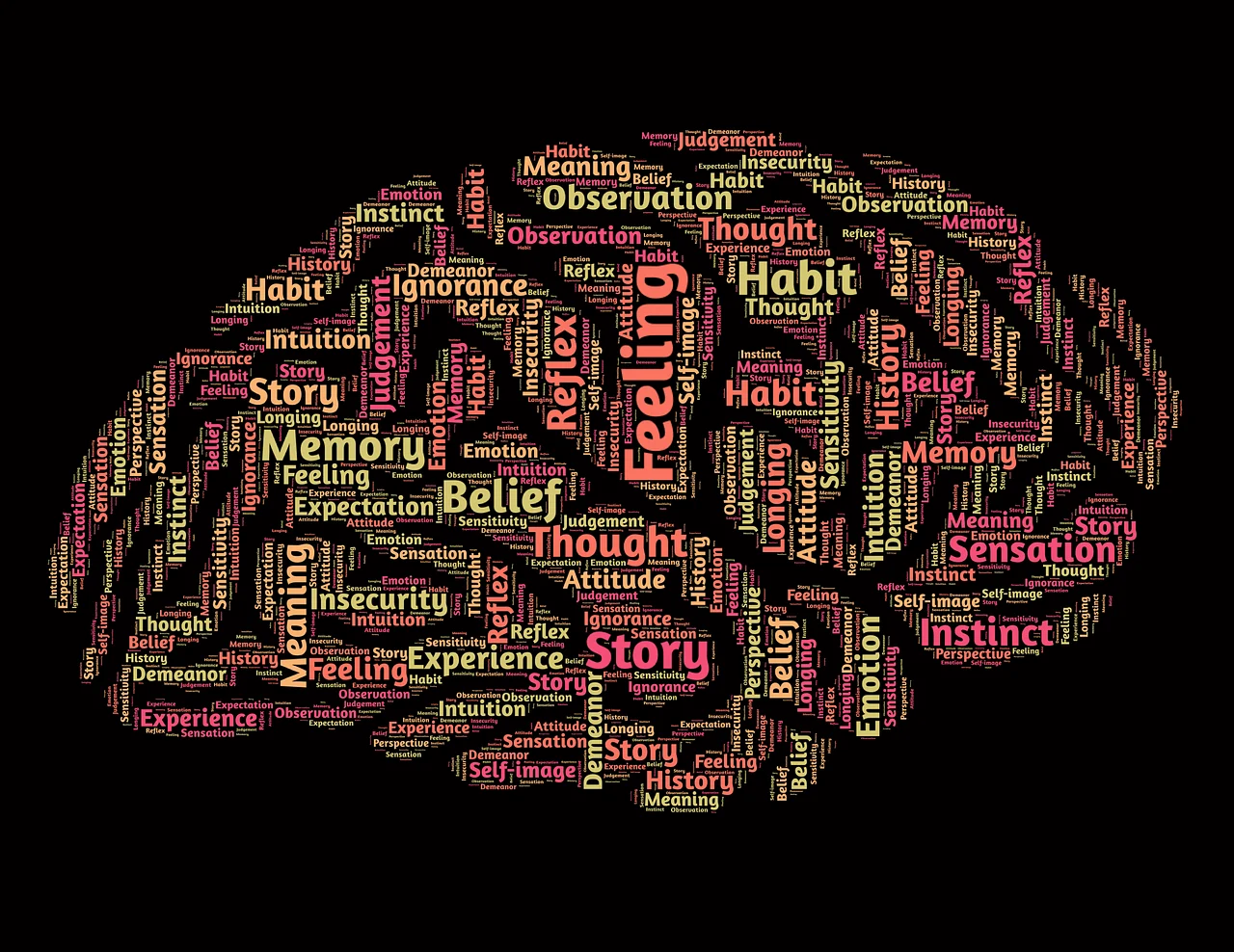
Article 1 - The effect of music on the brain
For young people, this subject grows empathy alongside scientific thinking. It helps us understand wellbeing, challenge misinformation and imagine kinder, healthier futures.
Cognitive Neuroscience and Music Psychology
Alistair Mcintosh, 16 · Rugby School, Warwickshire
“Life seems to go on without effort when I am filled with music.” – George Eliot
For centuries music has been everywhere going through different genres while also having many ways of creating it. Music is also a very harmonic mixture of pitch, timbre, dynamics and rhythm and therefore is quite hard for the brain to pick it apart as it has to “integrate the sequentially ordered sounds into a coherent musical perception,” - Journal of Biology – Jäncke, L. (2008).
This process of putting together different elements of music is quite similar to the process our brain goes through when we are reading a book, reading certain letters putting them together to ultimately form a word which has a certain meaning in our brains (Jäncke, 2008). People enjoy reading books because it tells a story in your brain which can calm/relax/excite/scare you, which is predicted by your brain before you read, similarly music also paints a picture in your head, with some having lyrics that present a mood or tell a story and some having certain instruments which convey feeling of pride, an example of that being in the national anthem ‘O’ Flower of Scotland’ which conveys patriotism which the national instrument of Scotland the bagpipes and the commanding sound they produce alongside the lyrics which suggest the country being strong and mighty beating its neighbours in a feat for independence. Although music can have different effects on different people.
Music can put people into certain moods, for example in church hymns put you in the mood for church (Eck, 2024) this is not just useful but positively impacts people who take pleasure feeling certain ways, religious church hymns make people feel at one with their god where sad songs can also help people make the most out of their emotions in rough times allowing them to feel understood in a way. This all happens because of functions in the brain. “Music lights up nearly all of the brain” (Eck, 2024), the hippocampus and amygdala which are both sections of the brain that trigger emotional responses and feelings to music using your memory. The limbic system, which controls the feeling of pleasure, motivation and reward, and the body’s motor system. Which is why “it’s easy to tap your feet or clap your hands to musical rhythms,” according to Andrew Budson, MD ’93, chief of cognitive and behavioural neurology at Veterans Affairs Boston Healthcare System. (Eck, 2024) This shows music plays a certain role in the body where it is meant to be.
A lot of people wonder why music can transmit emotions, for example what makes a sad song sad. Well, first in the brain sadness is no single hormone but a combined set of deficiencies in a few hormones, for example; serotonin (which is the hormone for happiness, pleasure and well-being), Dopamine (which is the hormone for feeling good) and Norepinephrine (which regulates stress). (The Insight Clinic, 2024) without these hormones a person would be overwhelmed with stress and sadness. A lot of the time the sadness is stimulated by vivid lyrics which tell a story which is not pleasant or certain keys, notes, pitches which in our head relate to sadness alongside an either slow mellow type of music or an angry and aggressive quick style. Ultimately all these factors add up to create a feeling of sadness which can be particularly moving in music as music is a part of almost every culture in the world as well as widely accessible globally.
The effect of pitch on mood, pitch is the building block of scales and chords (Paganini, 2020) alongside rhythm, it is one of the major contributors of melody and harmony which allows musicians to access the most depth of emotion which ultimately allows us to unlock our emotions which has an overall positive affect on relieving ourselves from our emotions. (Paganini, 2020) Not in just music but pitch is part of our everyday lives, with every noise you hear having a certain pitch (with one pitch being known as a tone), it is key for communication which again is a huge role of transmitting emotions and understanding each other alongside being the key element to writing a song as different pitch’s which work well together are a way to make up a song.
Why do people have emotional connections to music? The connection is scientifically known as the mere-exposure effect.
Music does not just affect hormones and brain functions, it can also affect you heart rate, breathing and also having the chance to give you goosebumps (frisson), alongside goosebumps frisson (musical “chills”) can cause tingling skin and heightened arousal. Studies of Neuroimaging tell us that these responses are due to the brains ‘reward circuitry’, particularly the nucleus accumbens andventral striatum which is where dopamine is released to generate pleasure during more emotionally powered pieces of music. (Blood & Zatorre, 2001) These physical symptoms that music give you make a lot of people more inclined to listen to music and share this experience with their friends which in turn also tends to make musicians wealthier, which links moving emotional pieces of music and making money.
Music in sport, music is known to motivate people in sport, for example in the 2012 Olympics Greg Rutherford competed and won a gold medal in men’s long jump. “He asked the audience to clap, at a pace he set, counted to 4 and began to run.” (Rizkallah, 2021) Listening to Music is a keyway athletes get their head in the game, this works in all sports but the genre of music may vary depending on which sport you play, for example archers may listen to relaxing music such as classical or soft pop but weightlifters may listen to intense heavy metal or hard rock to keep their mindset. Nonetheless the point is the same all round music is known in sport to provide mental help to performers at every level.
In conclusion, Music is fundamental and necessary in many people’s lives for a wide variety of reasons, ranging from patriotism to motivation to helping you get through a touch time at school or at home. Music is always there and that is why the music industry in 2024 was worth £7.6 Billion, (UK Music, 2024) because music is more than just noise, it has a deeper meaning that nobody has singularquite figured out yet, just pieces of a puzzle to this plethora of rabbit holes on this one subject opening up into lots of mini sub-questions. So why does music make people feel emotions? It’s a mixture of a chemical reaction in your brain linking the music to emotional sectors making you feel emotion.
References:
Eck, A. (2024). How Music Resonates in the Brain. [online] magazine.hms.harvard.edu. Available at: https://magazine.hms.harvard.edu/articles/how-music-resonates-brain.
Fink, J. (2020). Why and How Music Moves Us | Pfizer. [online] Pfizer.com. Available at: https://www.pfizer.com/news/articles/why_and_how_music_moves_us.
Jakubowski, K. (2023). Why does music bring back memories? What the science says - Durham University. [online] www.durham.ac.uk. Available at: https://www.durham.ac.uk/research/current/thought-leadership/2023/03/why-does-music-bring-back-memories-what-the-science-says/.
Jäncke, L. (2008). Music, memory and emotion. Journal of Biology, [online] 7(6), p.21. doi:https://doi.org/10.1186/jbiol82.
No Author (2024). The Chemistry of Sadness Hormones - The Insight Clinic. [online] The Insight Clinic. Available at: https://theinsightclinic.ca/the-chemistry-of-sadness-hormones/.
Paganini, W. (2020). How pitch affects our brain. [online] Medium. Available at: https://medium.com/@walzer.paganini/pitch-4eb572660bf9.
Rizkallah, M. (2021). How music benefits training and sports performance. [online] PPL PRS. Available at: https://pplprs.co.uk/productivity1/training-sports-performance/.
UK Music (2024). This Is Music 2024. [online] UK Music. Available at: https://www.ukmusic.org/research-reports/this-is-music-2024/.
Wikipedia Contributors (2019). Mere-exposure effect. [online] Wikipedia. Available at: https://en.wikipedia.org/wiki/Mere-exposure_effect.
“Science is for everyone.
The future is for young people.”